- English
- Español
- Português
- русский
- Français
- 日本語
- Deutsch
- tiếng Việt
- Italiano
- Nederlands
- ภาษาไทย
- Polski
- 한국어
- Svenska
- magyar
- Malay
- বাংলা ভাষার
- Dansk
- Suomi
- हिन्दी
- Pilipino
- Türkçe
- Gaeilge
- العربية
- Indonesia
- Norsk
- تمل
- český
- ελληνικά
- український
- Javanese
- فارسی
- தமிழ்
- తెలుగు
- नेपाली
- Burmese
- български
- ລາວ
- Latine
- Қазақша
- Euskal
- Azərbaycan
- Slovenský jazyk
- Македонски
- Lietuvos
- Eesti Keel
- Română
- Slovenski
- मराठी
- Srpski језик

Home
>
Products > Steel Pipe Tower > Transmission Line Steel Pipe Tower > 220kV Power Transmission Pipe Tower
Products
- Angle Steel Tower
- Electric Transmission Angle Steel Tower
- Communication Angle Steel Tower
- Monitoring Angle Steel Tower
- 220kv Transmission Line Electric Angle Steel Tower
- 110kv Transmission Line Electric Angle Steel Tower
- 330kv Transmission Line Electric Angle Steel Tower
- 500kv Transmisson Line Angle Steel Tower
- 66kv Angle Steel Tower
- 66KV Angle Steel Electric Power Tower
- Communication Tower
- Steel Pipe Tower
- Transmission Line Steel Pipe Tower
- Single Steel Pipe Tower
- Telecommunication Steel Pipe Tower
- Monopole Steel Pipe Tower
- 3 Leg Steel Tube Pipe Tower
- 220KV Steel Pipe Tower
- 110KV Steel Pipe Tower
- Lightning Steel Pipe Tower
- 500KV Steel Pipe Tower
- 66KV Steel Pipe Tower
- 330 KV Steel Pipe Tower
- Telecommunication Single Tubular Tower
- 10KV Steel Pipe Tower
- 10KV SIngle Pipe Tower
- 800KV Steel Pipe Tower
- Single Pipe Tower
- 132KV Steel Pipe Electric Power Tower
- 10KV-220KV Steel Pipe Electric Power Tower
- 4 Leg Telecommunication Microwave Tower
- High Voltage Communication Tower
- High Voltage Tesnsion Power Tower
- Single Tubular Monopole Tower
- Substation Steel Structure
- Angle Bar Tower
- 750KV Angle Steel Transmission Line Tower
- 10KV 33KV Transmission Line Tower
- 330KV Angle Steel Transmission Line Tower
- Tesioning Electric Transmission Tower
- 1000KV Electric Angle Steel Tower
- Lightning Tower
- Training Tower
- WiFi Communication Tower
- Power Line Tower
- Tangent Suspension Tower
- Terminal Tower
- Tension Steel Tower
- Single Monopole Tower
- Suspension Angle Steel Line Tower
- Angular Steel Electric Tower
- High Voltage Tower
- 66kv 120kv 220kv Steel Tower
- Transmission Electric Line Steel Lattice Tower


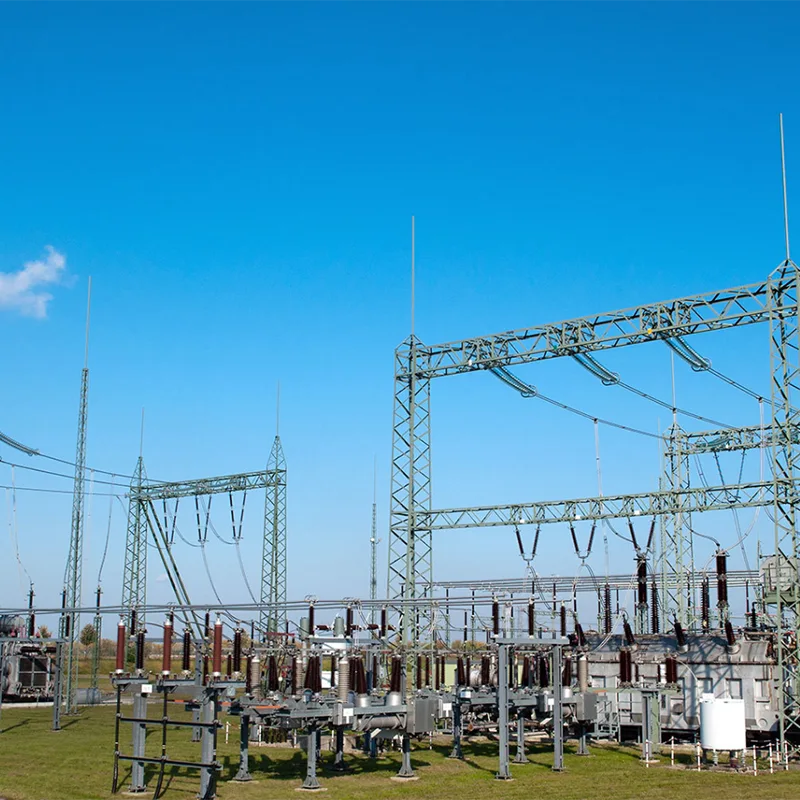
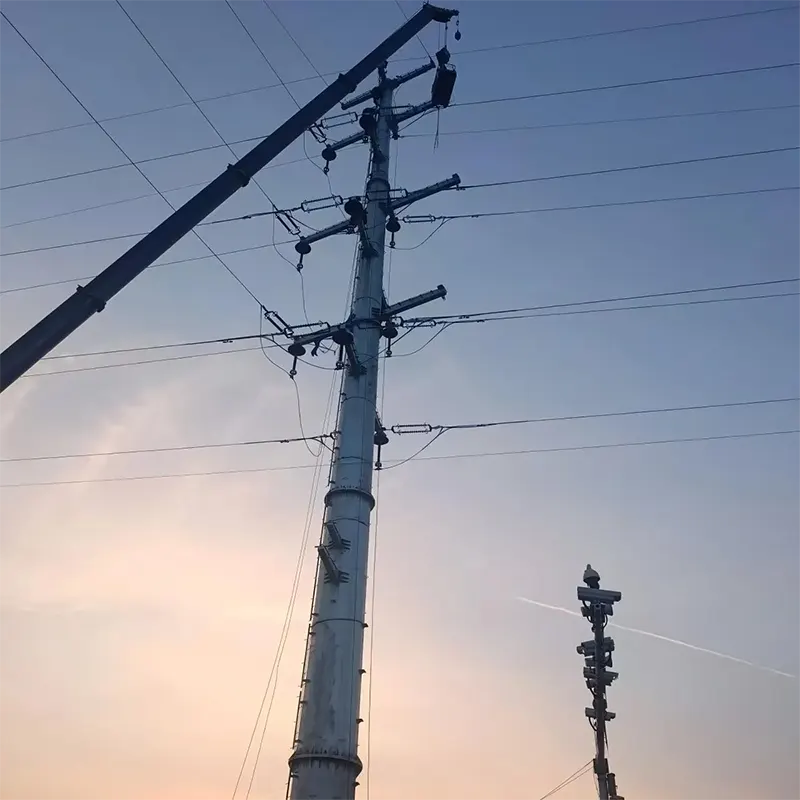
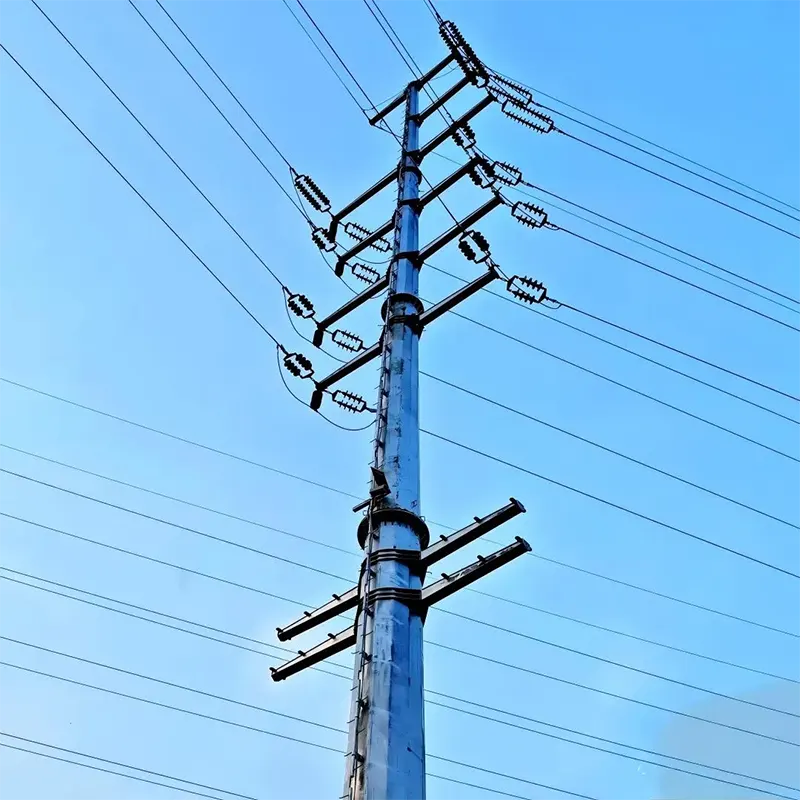
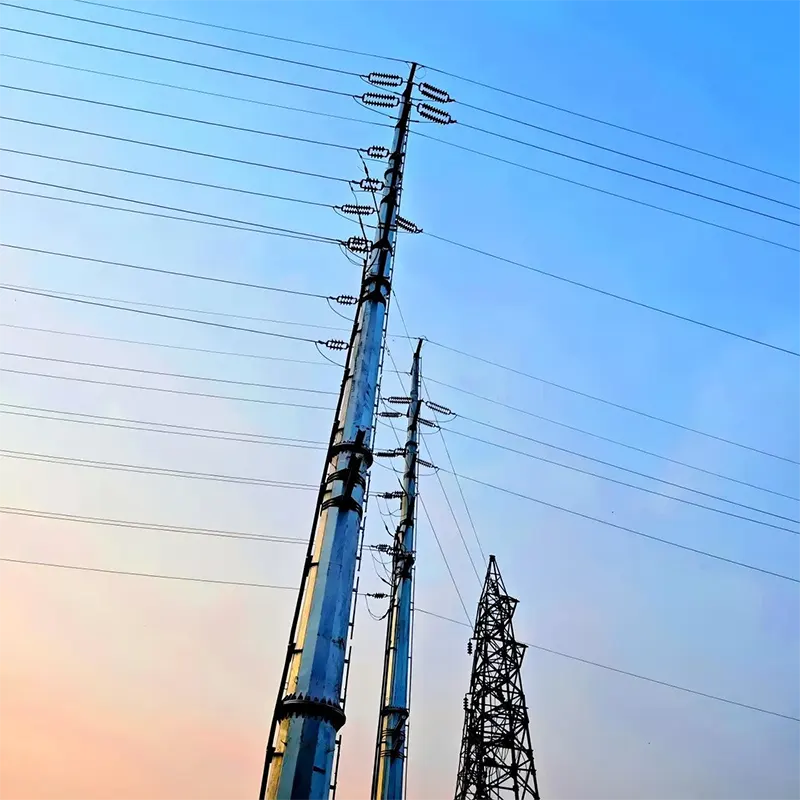
220kV Power Transmission Pipe Tower
A 220kV power transmission pipe tower is a tubular steel tower whose slender shaft takes a fraction of the land footprint of lattice towers — ideal for farmland, urban fringes, and tight corridors. MTtower builds single and double circuit 220kV pipe towers, hot-dip galvanized. Factory direct from Qingdao. Contact us for a quotation.
Send Inquiry
Product Description
220kV power transmission pipe tower replaces the open lattice of angle steel members with a hollow, tapered polygonal steel shaft — usually 12-sided or 16-sided, formed by bending steel plate into a cone and welding the longitudinal seam. The result is a structure that is dramatically slimmer and visually lighter than a lattice tower of the same capacity.

Why does that matter? Because land is the most expensive component of any transmission line. The 220kV power transmission pipe tower needs a square base of 6–9 meters; a pipe tower of the same voltage needs a foundation barely larger than the shaft itself. Where right-of-way is narrow, land is costly, or communities object to "electricity pylons" in their view — the pipe tower is the design that keeps projects moving.
Structure and Materials of Transmission Pipe Tower
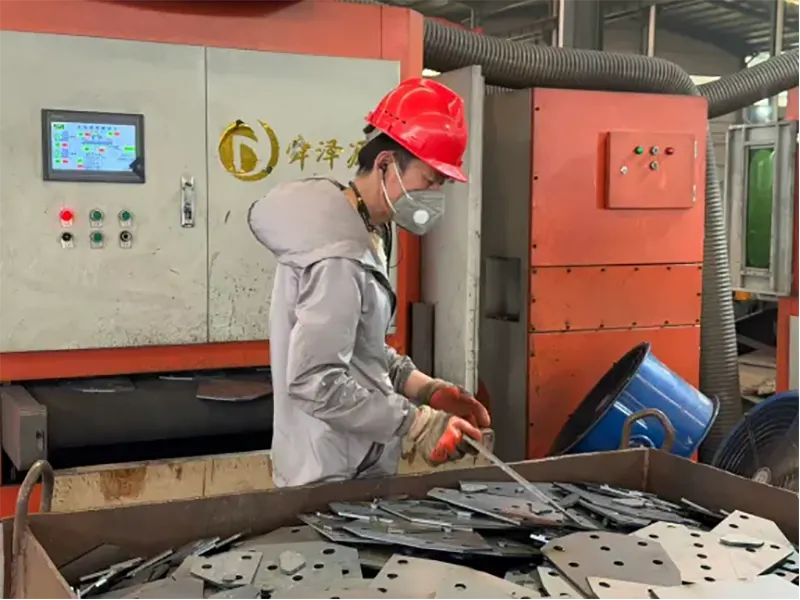
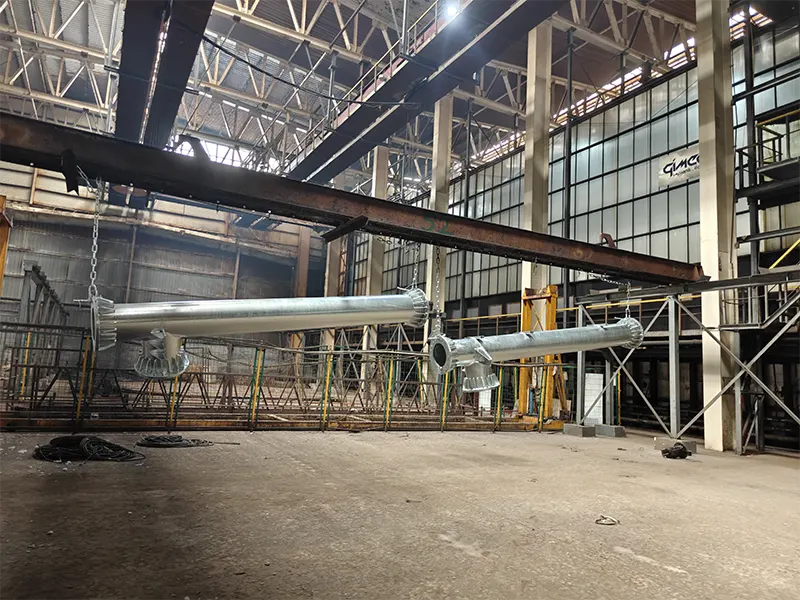
The shaft is fabricated from hot-rolled steel plate (Q345 / Q355) bent into a tapered polygon and welded with submerged arc welding along the seam. Sections are joined with slip-joint sleeves or flange connections, and cross-arms bolt onto the shaft at the top.
Shaft plate: Q345 / Q355, 6–30 mm thickness depending on height and load
Section connection: internal slip-joint (sleeve) or bolted flange rings
Cross-arms: lattice or tubular, single or double circuit configurations
Base: bolted base plate on anchor bolts, or direct-embedded shaft
Finish: hot-dip galvanized per ISO 1461, 85 µm minimum
Height: 25m – 60m standard; higher designs available on request
A key advantage of the pipe tower is its torsional stiffness. A lattice tower resists twisting through its bracing network; the closed polygonal shaft resists torsion inherently — which is why pipe towers handle unbalanced conductor loading and heavy angle turns so gracefully.

Key Features & Benefits
Land Footprint Cut by up to 70%
A 220kV power transmission pipe tower needs roughly one-third of the foundation area of an equivalent lattice tower. On a 50 km line, that difference can save thousands of square meters of compensated land — often the difference between project approval and deadlock.
Neighborhood-Friendly Profile
The slender shaft reads visually as a "pole" rather than a "pylon." Communities and planning authorities far more readily accept pipe towers along roads, through suburbs, and near residential zones. Several of our urban projects were approved precisely because the line spec called for pipe towers.
Superior Torsional Strength
The closed polygonal section gives the shaft high resistance to twisting loads. This makes pipe towers ideal for angle and terminal positions where unbalanced conductor tension would strain a lattice structure.
Faster Erection, Less Site Work
Fewer members mean faster assembly: a double-circuit 220kV power transmission pipe tower can be erected by a small crew with one crane in 1–2 days, versus 3–5 days for a lattice tower. Less site labor, less cranage, less weather exposure.
Clean, Low-Maintenance Design
No bracing network means no places for birds to nest, fewer climbing hazards, and easier future maintenance. The galvanized shaft surface is smooth and self-draining, shedding water and dirt efficiently.
Product Specifications
|
Parameter |
Standard Range |
|
Voltage Class |
220kV (110kV / 132kV also available) |
|
Tower Type |
Single-circuit / Double-circuit monopole |
|
Shaft Section |
12-sided / 16-sided tapered polygon |
|
Shaft Plate |
Q345 / Q355 hot-rolled steel plate |
|
Height |
25m – 60m |
|
Base Type |
Flange + anchor bolts / direct embedment |
|
Connection |
Slip-joint sleeve or bolted flange rings |
|
Galvanizing |
Hot-dip per ISO 1461, 85 µm min |
|
Design Standards |
DL/T 646 / GB 50545 / IEC 60652 |
|
Design Wind Speed |
28 m/s – 42 m/s |
|
Design Life |
50+ years |
Typical Applications
As a 220kV power transmission pipe tower manufacturer and supplier, MTtower supplies these towers in bulk at factory-direct pricing for:
220kV lines through agricultural land where footprint compensation is a major cost
Urban and suburban corridors with restricted right-of-way
Highway and railway adjacent routes where aesthetics matter
Substation entry and exit structures (terminal pipe towers)
Wind farm and PV plant 220kV collection and export lines
Upgrading existing 110kV corridors to 220kV without widening the right-of-way
FAQ
Q: When does a pipe tower make more sense than a lattice tower?
A: When land compensation is expensive, right-of-way is narrow, or aesthetics matter — urban areas, farmland, highways, and substation approaches. If land is cheap and the line runs through open country, a lattice tower is usually more economical. We can cost both options for your route.
Q: How is a 220kV power transmission pipe tower erected?
A: Sections are lifted by crane and joined by slip-joint or flange connections, bottom section first. Cross-arms are pre-assembled on the ground and lifted as one piece. A two-circuit pipe tower typically erects in 1–2 days with a 30–60 ton crane.
Q: Can pipe towers handle angle and terminal positions?
A: Yes — their torsional stiffness makes them particularly good at angle and terminal positions. Many projects use pipe towers for the whole line, including angles; for very heavy angles, we reinforce the shaft wall thickness.
Q: What is the zinc coating thickness?
A: Standard 85 µm minimum per ISO 1461. For coastal or industrial environments, we recommend 110–120 µm — available on request at modest cost increase.
Q: What is the lead time and MOQ?
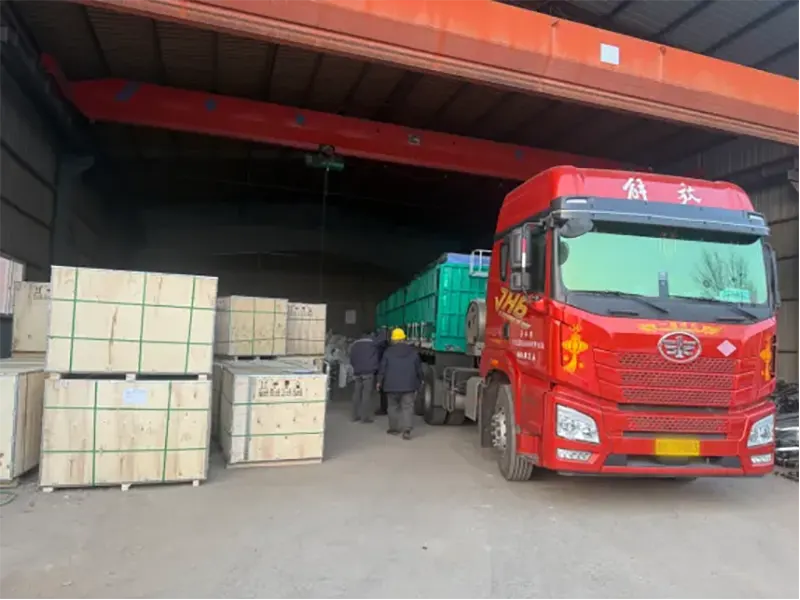
A: MOQ for customized pipe towers: 1 set. Delivery for 30 sets: approximately 20 working days after deposit. Payment: 30% T/T deposit, balance before shipment.
Hot Tags: 220kV Power Transmission Pipe Tower, Manufacturers, Suppliers, Factory, China, Wholesale, Cheap, Discount, Quality, Made In China, New Design
Related Category
Transmission Line Steel Pipe Tower
Single Steel Pipe Tower
Telecommunication Steel Pipe Tower
Monopole Steel Pipe Tower
3 Leg Steel Tube Pipe Tower
220KV Steel Pipe Tower
110KV Steel Pipe Tower
Lightning Steel Pipe Tower
500KV Steel Pipe Tower
66KV Steel Pipe Tower
330 KV Steel Pipe Tower
Telecommunication Single Tubular Tower
10KV Steel Pipe Tower
10KV SIngle Pipe Tower
800KV Steel Pipe Tower
Single Pipe Tower
132KV Steel Pipe Electric Power Tower
10KV-220KV Steel Pipe Electric Power Tower
4 Leg Telecommunication Microwave Tower
High Voltage Communication Tower
High Voltage Tesnsion Power Tower
Single Tubular Monopole Tower
Send Inquiry
Please feel free to give your inquiry in the form below. We will reply you in 24 hours.